What the "P" in Fullerton's Zoning Code Changes About the House You're Buying
October 8, 2026
October 8, 2026
Fullerton's staff report uses this example: On a 7,000-square-foot lot in Fullerton zoned R-1-7.2, the largest house the code allows has 3,500 square feet of living space. Add a "P" to the end of that zoning code and the cap drops to 2,800 square feet if you keep the existing house. If the existing house comes down, the cap is 2,400 square feet.
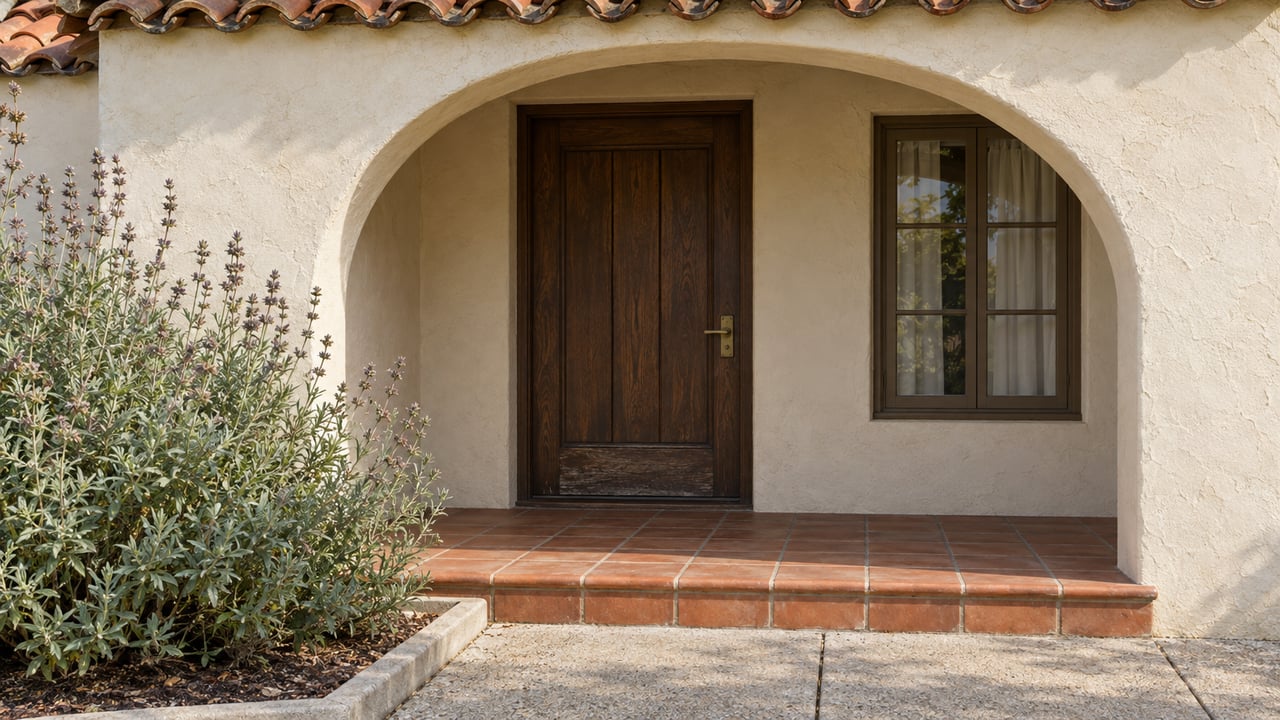
That one letter marks a Residential Preservation Zone. It matters more to a buyer than it looks on a listing sheet. The city's own staff report spells out the trade-off. A home in the zone keeps its single-family use. It gives up part of its building envelope and the state's SB 9 lot-split option. In exchange it becomes eligible for a property-tax program with a strict yearly deadline. So in these blocks, you're paying mostly for the house that is already standing. The lot's future potential counts for less.
The floor-area rule rewards keeping what's there. Under Fullerton Municipal Code §15.17.060.C.4, a preservation-zone lot can reach 40% of net lot area when at least one existing dwelling is preserved. Without a preserved dwelling, the limit is 35%. The demolition rules point the same way. Removing more than half of a house, or any part of its street-facing side, goes to the Landmarks Commission.
Here are the two zones side by side on the 7,000-square-foot lot the city uses as its example.
| Rule | R-1-7.2 | R-1-7.2P |
|---|---|---|
| Maximum living area, existing house kept | 3,500 sq ft (0.5 FAR) | 2,800 sq ft (40%) |
| Maximum living area, existing house removed | 3,500 sq ft | 2,400 sq ft (35%) |
| Front setback | Average of the two neighbors, 15 ft minimum | 20 ft encouraged; less than the street's typical setback goes to the Landmarks Commission |
| Parking for new development | Two-car garage for four bedrooms or fewer | Same count, but half may be uncovered behind the front setback |
| SB 9 two-unit project or urban lot split | Available under state rules | Not allowed |
The SB 9 line is easy to overlook. Fullerton treats a preservation zone as a historic district, so a two-unit project or urban lot split is off the table. The state's SB 9 fact sheet from HCD also excludes parcels in city-designated historic districts. Accessory dwelling units are still allowed. The city says they require Site Plan Review and must follow the preservation design standards.
For a buyer, the house you see is close to the most house the lot will ever hold. Any plan to scrape the lot and build bigger runs into the lower 35% cap and a Landmarks Commission hearing.
Since the envelope is tighter, it helps to know which projects need approval and from whom. The city sorts preservation-zone work into three levels of review:
The Director level covers less than many owners expect. A primary-bedroom suite at the back of the house that stays under 500 square feet can be handled there. A second-story addition visible from the street goes to Site Plan Review no matter its size. Second stories aren't banned outright. Fullerton's Residential Preservation Zone design guidelines recommend putting additions at the side or rear. They also show that a large second story can still pass if it matches the original house.
Some routine upkeep needs no review at all. The city's 2025 community presentation lists repainting and exterior repair as exempt from preservation review. On cost, the city fee schedule effective July 2025 lists $1,257 for a Minor Site Plan Class 1 on residential R-1P and R-2P projects, and $15,472 for a Major Site Plan. The schedule asks applicants to confirm fees with the Planning Division. Treat those numbers as a starting estimate. The Planning Division's applications page explains that new applications are checked for completeness before a hearing is scheduled. It doesn't give a turnaround time specific to preservation zones.
These rules are about to cover more of the city. On Tuesday, October 6, 2026, at 5:30 p.m., the City Council holds a public hearing on rezoning parcels in Lower Golden Hill from R-1-7.2 to R-1-7.2P. The affected streets are Richman, Malvern, Drake, Golden and Union avenues. The agenda lists the item as the first reading of an ordinance. As of today, the vote hasn't happened.
The request reached the city on January 19, 2025. A petition gathered by Fullerton Heritage covered 80 properties. Forty-eight supported the rezoning, 13 opposed it, and 19 didn't respond. The staff report describes a largely intact neighborhood of homes from the 1920s to the early 1940s. It names a group of larger 1970s homes on North Drake as an exception that doesn't blend with the older housing.
The Planning Commission voted 4–1 on June 10, 2026 to recommend approval, with Commissioner Fleenor opposed. Ernie Kelsey of Fullerton Heritage and a resident spoke in favor. Two other residents spoke against. Other speakers raised property rights, ADU permitting, and whether the zone would put off future buyers. One of the speakers said a family home had been altered heavily over generations and argued that owners should be able to opt in one property at a time. Staff recommended keeping the property in the district. The Lower Golden Hill staff report says owners aren't required to restore homes to their original construction, and that a district should cover whole blocks rather than skip individual parcels.
That exchange settles a question that matters in any of these neighborhoods. A house that has already been remodeled doesn't have to be undone, and it isn't exempt either. Inside the boundary, the whole block follows the same rules.
Fullerton's 2024 guidelines say a home in a preservation zone counts as a "qualified historical property," which makes it eligible for the Mills Act program. Under a Mills Act contract, the owner commits to restoring, rehabilitating or maintaining the home. In return, the property is reassessed in a way that may lower its property taxes. The savings aren't automatic. The contract is something an owner applies for.
Fullerton's 2024 guidelines put firm limits on the program. Applications are first-come, first-served, by appointment, and due by October 1 each year. The city processes no more than 10 contracts per calendar year. The city fee schedule effective July 2025 lists a $1,572 Mills Act application fee and an $88 annual renewal fee. The 2024 guidelines had put the application fee at $1,000, so confirm the current amount with the Planning Division. Contracts run 10 years and renew by one year on each anniversary. Owners file annual progress reports and an updated maintenance schedule.
The program is small. When the council approved a contract for 432 West Brookdale Place on February 3, 2026, staff called it the twelfth city property to request one. Approvals in 2025 included 621 North Richman Avenue, 229 North Cornell Avenue, 400 West Brookdale Place and 1112 East Whiting Avenue.
The calendar matters for anyone buying right now. The 2026 deadline was October 1. A buyer who closes this fall can't apply until the October 1, 2027 deadline, and with a 10-contract yearly cap, applying early helps. When you compare two similar homes, count the Mills Act as a possible future benefit. Don't count it as savings you'll see in your first year.
The research doesn't settle whether the zone raises prices. Fullerton Heritage says values in most historic districts rise faster than in undesignated neighborhoods, but it doesn't cite a study or Fullerton sales data. At the June hearing, one speaker said the zone could scare off buyers, and another spoke about buying a home in one. Those are opinions. Neither is market data.
According to the city's May 2025 presentation, College Park was the first preservation zone, set up in 1996. Since then the city has added the Presidents Avenues in October 2023, Upper Golden Hill in November 2024, and West Wilshire, Woods and Wickett Square in December 2024. Fullerton Heritage tells the history differently. It says the city established two preservation zones in 1979, and it says owners in 10 of 16 identified historic districts have one, so the full list is longer than these recent additions.
The city's "In Review" page lists Skyline Park and Oceanview, along with Lower Golden Hill, as neighborhoods where owners have asked about the zone. Skyline Park is a 114-lot, late-1920s subdivision bounded roughly by Skyline Drive, Cannon Lane, North Lemon Street and Sheppard Drive. Neither Skyline Park nor Oceanview has a council action on record.
Before writing an offer on an older Fullerton home, check four things:
Can I add an ADU to a home in a Fullerton preservation zone? Yes. The city requires Site Plan Review, and the ADU must meet the preservation design standards.
Do I have to restore a remodeled house to its original look? No. In the Lower Golden Hill report, staff stated that owners don't have to restore homes to original construction. The design guidelines apply to new work.
Do I need approval to repaint? No. The city lists repainting and exterior repair as exempt from preservation review.
Where is the actual ordinance? Residential Preservation Zones are governed by Chapter 15.48 of the Fullerton Municipal Code. The R-1P development standards are in §15.17.060.
If you're weighing a home in College Park, Golden Hill or another preservation zone, I'll pull the zoning, run the floor-area math on that lot, and map out the approvals your remodel plans would need before you commit to a price. Mary Meza Hayes works through these details with Fullerton buyers every day. Schedule your free consultation, and we'll start with the parcel you have in mind.
This article is general information, not legal, tax or financial advice. Consult a qualified professional about your situation.
Stay up to date on the latest real estate trends.


Whether you’re buying your first home or selling your luxury property, Mary is ready to help. Her client-first approach ensures your goals are met with professionalism, care, and confidence — every time.